
Two Cups of Sauce
A few weeks ago, Netflix served me up a Bon Appétit series called On the Line, which follows chefs from the morning until the start of dinner service. One of the first things you notice in the episodes is the extreme lengths high-end restaurants will go to achieve a distinctive result.
For example, one episode shows chef Emily Yuen of Yingtao, a Michelin-starred Chinese restaurant in New York City, spending 45 minutes peeling tiny individual tomatoes for a scallop dish. Few workplaces would have a boss personally take on such a time-consuming task. It’s only worth it if they’re committed to excellence and know that those small details are the difference between good and great. As she put it: “Each dish may seem simple, but you need 20 different layers [to make] a perfect dish.”
Klay Kim, the sous chef at Jungsik, a Korean restaurant with three Michelin stars, explained its multi-day process of turning a stockpot’s worth of ingredients into an aioli sauce for an octopus dish. “By the time it gets finished, the final product should be around two cups,” he said, a tiny amount given the volume of ingredients and time. “But that’s what makes it so unique and so delicious—because you’re putting all this effort to create such a complicated sauce and yet so simple.”
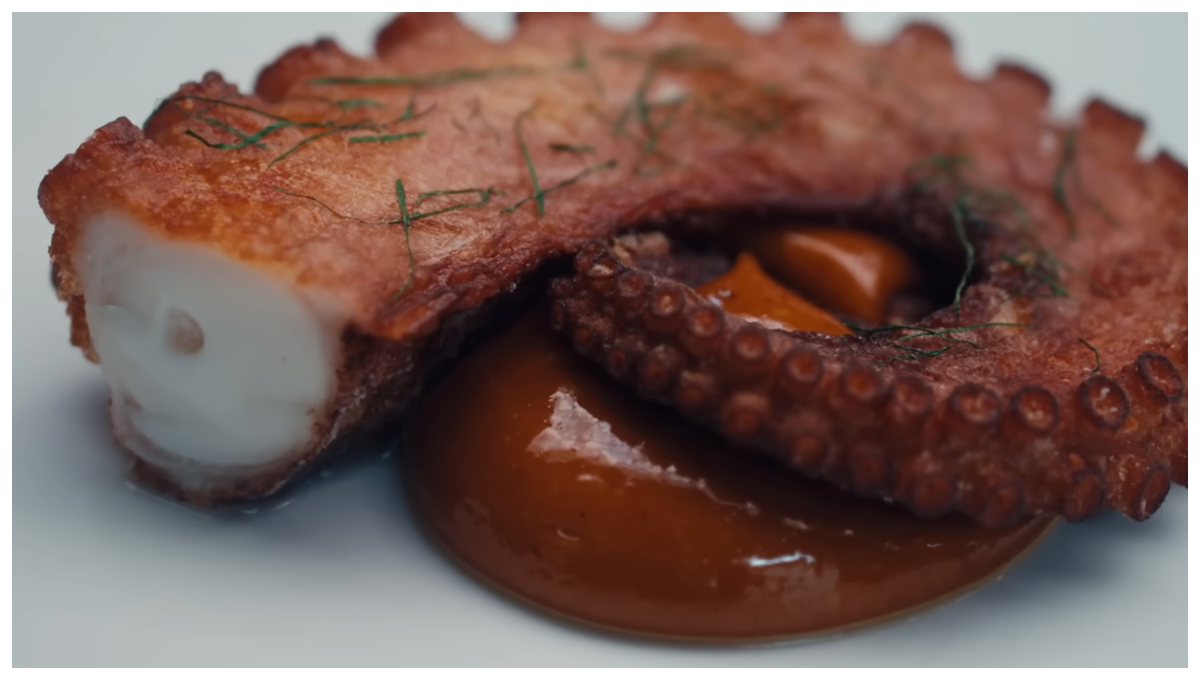
I was struck by Kim’s point that something that seems simple can mask a careful and complicated preparation—or twenty layers, in Yuen’s framing.
It reminded me of a framework a boss told me twenty years ago. He described it this way: Think about driving a car. An automatic transmission is easy to use, but it's complicated under the hood. A manual transmission is simple under the hood, but it's hard to use.
The analogy has always stuck with me as a great way to describe the products and services we experience, and even the work we see at the office. For example, if you see a PowerPoint presentation with a complex analysis and have to ask, “What’s the so what?”, it’s like a manual transmission. It works, but the reader has to do the hard work to understand it.
On the other hand, when someone presents the analysis with a framing that perfectly synthesizes their findings and what to do about them, it’s probably because they took the time to really think it through—to make something complicated both simple and accessible.
But here’s the thing: The difference between the manual transmission and the automatic transmission solution is not just the extra effort. Rather, it’s how much care one puts into it.
When we experience a seamless process, it is usually not a natural state. It’s because several teams cared enough about making the process easy for users that they did the work to remove the seams.
When we sit in the back of a conference room and can still read every word on the slide, it’s probably because the presenter thought about the person sitting there and adjusted the colors and font sizes to ensure they could.
When we go to someone’s house, and they have both dairy and non-dairy milk options when serving coffee, it’s probably not because they just happened to have all of those options on hand. It’s probably because they thought about their guests’ needs and wanted to ensure everyone would have what they wanted.
Those may seem like disparate examples, but they are all forms of hospitality and care.
You could try to teach these as skills or put them in checklists and performance expectations, but the sustainable fuel for those actions comes from the leadership work of getting people to value caring for others. The care factor is what makes people take those decisions across everything they do. The instinct that pushes someone to design the elegant “automatic transmission” solution for their customers is the same one that pushes them to spend days building and concentrating the flavor of an octopus aioli—a belief that they deserve it.