
When AI Makes It Easy to Do the Wrong Things
A few months ago, while on the way to pick up my kids from school, I was texting with my friend Kate about a business challenge. When I returned home, I paused the exchange, telling her, “I’ll get back to you after I get some food in these kids.”
A couple of hours later, I sent this picture with the comment: “‘Get some food in these kids’ turned into spending 90 mins on a dessert that will completely reverse having gone to the gym earlier.”
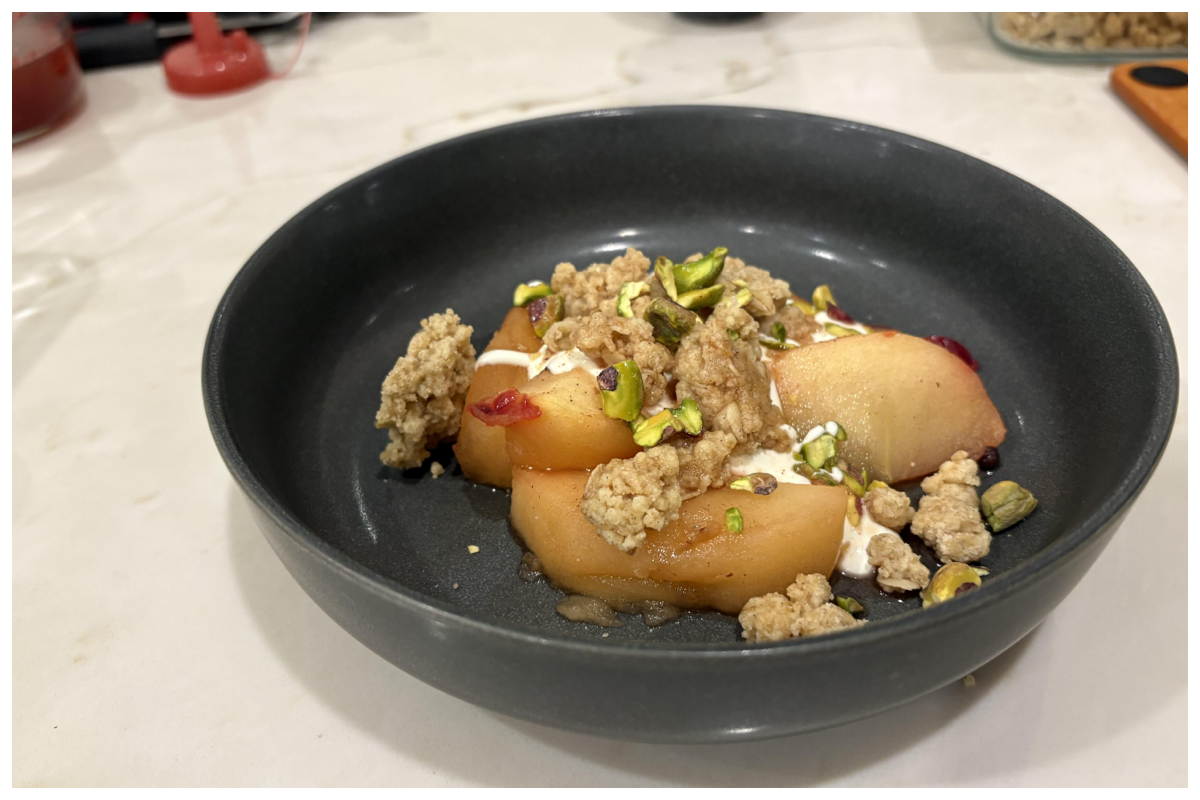
What happened?
The kids chose to make their own dinner, so my time was temporarily freed up. Then, because I’d made the recipe the previous weekend, I had both a latent desire to see if I could improve upon my performance from last time and leftover ingredients. The sudden free time and readily available ingredients made it easy to start the project, trumping any analysis of the most important ways to spend my time that evening.
I was reminded of that situation when a friend sent me a Harvard Business Review article titled “AI Doesn’t Reduce Work—It Intensifies It,” in which researchers Aruna Ranganathan and Xingqi Maggie Ye summarized their study of how generative AI changed work habits at a tech company. They found that “employees worked at a faster pace, took on a broader scope of tasks, and extended work into more hours of the day, often without being asked to do so.”
Critically, the faster pace of work was driven by employees’ decisions. “On their own initiative workers did more because AI made ‘doing more’ feel possible, accessible, and in many cases intrinsically rewarding.” They spun up new projects because AI made it fun and easy. This is exactly what I did with the apple crumble!
However, in many cases, employees’ new projects actually created more work for others—”reviewing, correcting, and guiding AI-generated or AI-assisted work produced by colleagues.” Rather than creating greater efficiency, AI created busywork.
Moreover, I’d suspect that most of the firm’s employees didn’t ask their boss for permission to start projects, since they weren’t using expensive resources like engineers and designers at the outset. That dynamic is obviously an advantage for speed and innovation, but it also reduces leaders’ ability to prioritize resources. That only increases the need for leaders to drive strategic clarity in their organizations, enabling employees to make decentralized decisions aligned with the overall strategy.
The tech firm’s example is also a reminder that an organization’s AI use policy shouldn’t be simply about guardrails or vague goals like “efficiency.” Instead, it should tell people which outcomes are useful, ideally in terms that matter to them.
First, undefined goals like “efficiency” can lead to perverse outcomes. At the tech firm, write Ranganathan and Ye, “Over time, this rhythm raised expectations for speed—not necessarily through explicit demands, but through what became visible and normalized in everyday work. Many workers noted that they were doing more at once—and feeling more pressure—than before they used AI, even though the time savings from automation had ostensibly been meant to reduce such pressure.” On a recent episode of The Pitt, Noah Wyle’s character made a similar point. “Sure, AI will make doctors more efficient, but hospitals will expect us to treat more patients—without any extra pay, of course—all the while eliminating staff positions for attending and residents.”
A more robust, strategy-aligned AI use policy would include clear statements of intent, which might sound like:
We want to spend less time on _____, so we can spend more time on _____.
Using AI to automate low-value, but necessary activities is good. Using AI to automate low-value activities that should really be eliminated is useless.
Our competitive advantage is _____; the most useful AI uses would help us do that better.
If we were able to achieve _____, it would be a big win for the people we serve.
We want to enable a four-day workweek while keeping salaries constant.
If you’ve applied AI to your work and still feel busy or can’t leave work by 5 p.m., let’s discuss.
(By the way, the apple crumble is a version of this recipe: Red-Wine Roasted Pears With Cardamom Crumble.)