
Books That Stuck With Me in 2025
For the past few years, the vast majority of the books I’ve read were about leadership, strategy, productivity, or getting ahead at work—i.e., the topics I was writing books about or helping my clients with.
Turns out, I’ve been steadily moving away from the topics that are directly related to work—a trend that significantly accelerated this year. I didn’t intend to have a different allocation of attention, but looking back on the year, it came from two things:
I was more interested in better understanding the changing world (sometimes by reading history) than just the world of work.
I hit a midyear creative rut where I read a string of works on art, design, and typography to switch things up. I even read more than one fiction book, which I probably haven’t done since college!
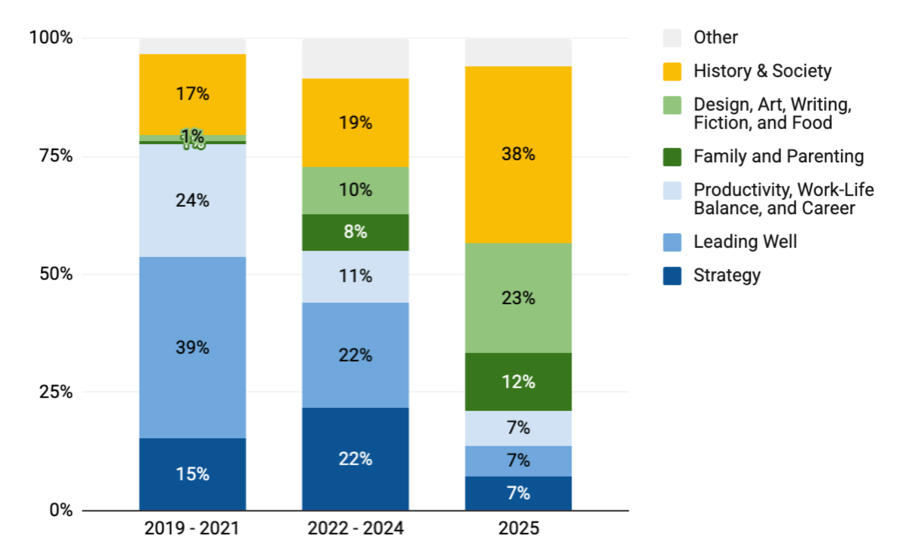
(It’s probably not surprising to anyone that I keep a spreadsheet to track these things.)
Here are a few books that stood out from that reading.
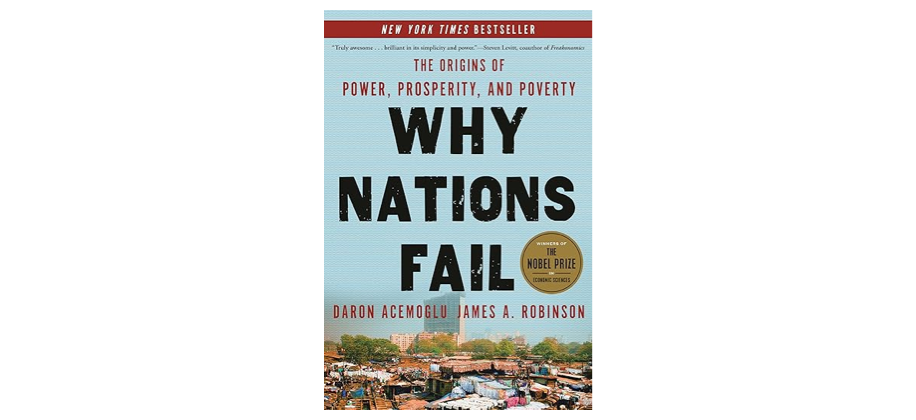
Why Nations Fail: The Origins of Power, Prosperity, and Poverty by Daron Acemoglu and James Robinson
This book synthesizes the research that led to Acemoglu and Robinson winning the Nobel Prize in Economics in 2024. Their focus on institutions and politics is surely relevant for the moment we’re in.
For example, they write about the strength of U.S. institutions, “[T]he political institutions ensured stability and continuity. For one thing, they made sure that there was no risk of a dictator taking power and changing the rules of the game, expropriating their wealth, imprisoning them, or threatening their lives and livelihoods. They also made sure that no particular interest in society could warp the government in an economically disastrous direction, because political power was both limited and distributed sufficiently broadly that a set of economic institutions that created the incentives for prosperity could emerge.”
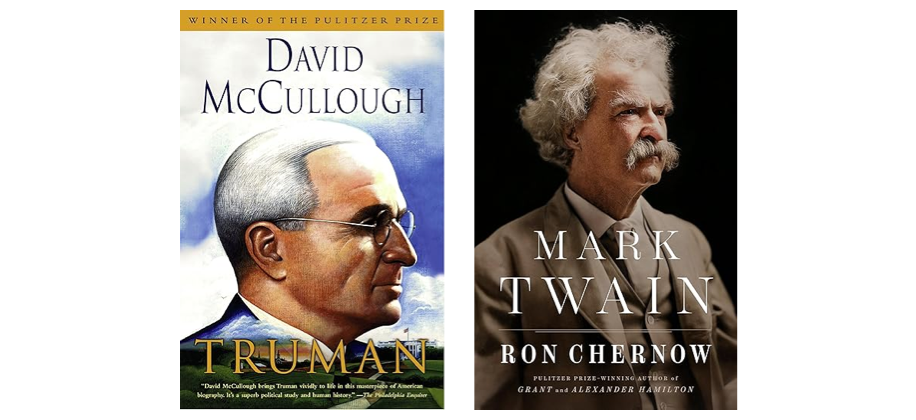
Mark Twain by Ron Chernow and Truman by David McCullough
Both are great biographies, but a common theme across both is how Twain and Truman rose to professional fame while struggling with tenuous finances.
Truman was conflicted about the role of money, once writing, “To succeed financially a man can’t have any heart.” Instead, his aspiration was “to have to work just enough so if you stopped you’d not go busted at once—but still you’d know if you didn’t work you couldn’t live.” Twain, on the other hand, had an unquenchable thirst for money. Writes Chernow, “So entangled did Twain become with his investments that at times it was hard to tell whether he was a literary man with business sidelines or a businessman who dabbled in letters.”
The difference in approach meant that Truman, even though struggling for money, was able to devote his life to service, whereas Twain was forced into detours from his artistic calling because he was constantly chasing status and the funds to repay the debts incurred by that chase.
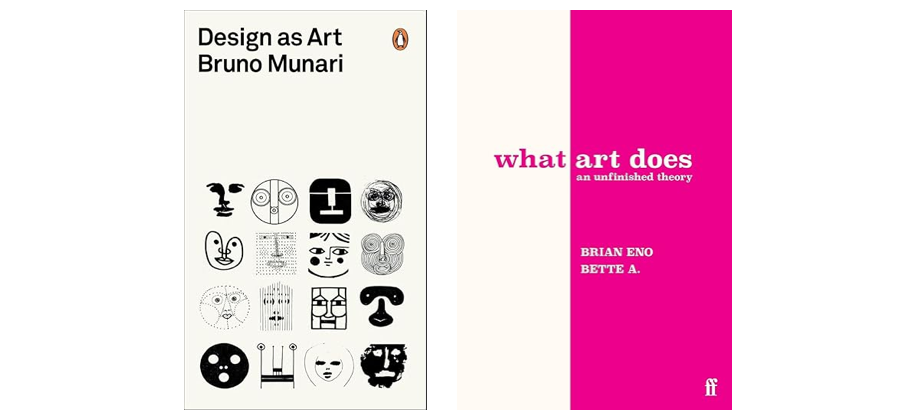
Design as Art by Bruno Munari and What Art Does: An Unfinished Theory by Bette Adriaanse and Brian Eno
Writing in 1966, Italian designer Bruno Munari articulates how art should be something that’s present in everyday experiences. “Today it has become necessary to demolish the myth of the ‘star’ artist who only produces masterpieces for a small group of ultra-intelligent people. It must be understood that as long as art stands aside from the problems of life it will only interest a very few people. Culture today is becoming a mass affair, and the artist must step down from his pedestal and be prepared to make a sign for a butcher’s shop (if he knows how to do it).”
What Art Does is a short book that brilliantly explains why art is important to people. This lesson resonated with me: “Paying attention to the things we love and that make us feel good and happy isn’t an indulgence, but a sensible use of our faculties. That’s why we evolved them. The problem is that those faculties are constantly overwhelmed by things that other people wished that we liked. To discover what you really like is to have a guiding star and to be able to navigate through the blizzard of all the voices telling you what you ought to like – the advertisers, politicians, influencers, ideologues, algorithms. It is your claim to independence of mind (even if a billion other people like it too!).”
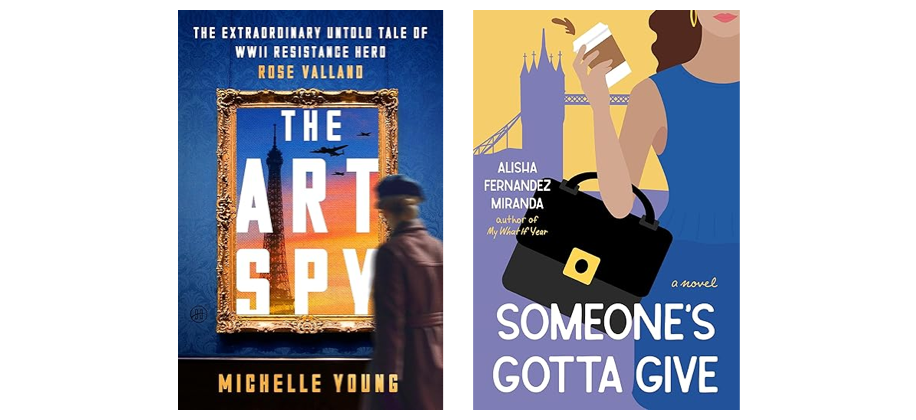
The Art Spy by Michelle Young and Someone’s Gotta Give by Alisha Fernandez Miranda
If you’re looking for some fun reads, two of my friends and college classmates wrote books this year. The Art Spy tells the story of Rose Valland, a French woman who worked in the German-occupied art museums in France during World War II. She played a major role in the effort to document and then reclaim stolen art after the war.
Something’s Gotta Give is a novel about an American transplant in London and her quest to stay true to her values and professional purpose—surely a topic that would resonate with many.